
When an app update breaks the car: a look under the hood of 90,000 reviews

Barbara Houdayer
Head of Marketing
Your phone can now do things your car keys never could. A TikTok comparing carmakers' apps shows off the party tricks: opening the doors from afar, warming the seats on a cold morning, even moving the car to an assigned parking spot with nobody inside.
Drivers increasingly adopt them, and EV owners lead the way. According to J.D. Power, nearly 80% of US owners of gas and hybrid cars use their brand's app, but only 27% are frequent users. Among non-Tesla EV app users, 55% are frequent users, and more than half of EV owners say the app influenced which car they bought.
That raises the stakes for every release: nearly three in four owners who got a software update don't think it improved their car experience.
So we looked under the hood of the app stores: over 90,000 App Store and Google Play reviews of 36 car brands' apps, from January 2025 to October 2026. Updates come up in 1 review in 13, and rarely as good news. Caplena's Insights Radar flagged two of the findings below before we went looking.
Key takeaways
7.7% of reviews mention an app update. They average 1.80 stars, against 2.99 for the rest.
Crashes come up in 24% of reviews mentioning an app update, 2.1 times their usual rate. Comparisons with the old app are 3.7 times more common than usual.
One Android release pushed update mentions to 54% of Honda's reviews in May 2026 (651 out of 1,212).
Engine check: app updates cost more than a full star
6,988 reviews mention a software update. Their net sentiment is -87.6. (Net sentiment is the share of positive mentions minus the share of negative ones, from -100 to +100.) In plain terms, almost nobody writes in to say an update went well.
The star ratings agree: update reviews average 1.80 stars, about 1.2 below the 2.99 of all other reviews.
In most months, updates come up in 4.5% to 9.8% of reviews. Then a bad release lands and the line jumps: 13.0% in April 2026 and 19.8% in May, most of it from a single brand (more on that below).
What breaks when an update breaks? Crashes lead: they appear in 24% of update reviews, 2.1 times their usual rate. Comparisons with the old app are rarer, at 10%, but 3.7 times more common than usual. Missing trip history (1.5 times), fuel range (1.4 times) and login trouble (1.3 times) follow.
One driver summed it up in the simplest way:
Which car apps stall after an update
Across all brands, 7.7% of reviews mention an update. Among the 30 brands with at least 300 reviews, five sit near twice that: CUPRA (17.1%), Honda (16.9%), Volvo (14.2%), Land Rover (14.1%) and MG (14.0%).
BMW makes a useful benchmark. Of those 30 brands, its reviews rate highest, at 4.06 stars. That figure includes two week-long bursts of mostly five-star ratings on its US and Spanish App Store apps, in August 2025 and September 2026 (2,447 reviews). Without them, BMW still rates highest, at 3.84 stars, and its reviews mention updates in 6.1% of cases and login in 2.4%: the figures in the chart above. Jeep, Dodge and Mercedes-Benz mention updates even less often, but rate lower: a quiet update record isn't the whole story.
The brands at the top of the list have strengths worth protecting. Honda drivers praise remote start (114 positive mentions), and so do Land Rover drivers (46). Volvo owners like the door locks and climate preconditioning (30 positive mentions each), and MG owners the preconditioning (25). CUPRA's reviews are fewer, and its update share swings with single releases: it hit 54% in June 2026 (62 of 114 reviews), when a mandatory update dropped support for older phones.
This is what a competitor benchmark looks like in practice: your app next to the apps your customers compare it with, measured the same way.
3 app breakdowns from the repair log
Averages hide the moments that matter. Three releases show how fast reviews react, and what a recovery looks like.
1. HondaLink on Android, spring 2026.
Version 5.2.2 sent drivers into a loop: the app demanded an update that Google Play didn't offer. In the week of April 27, HondaLink got 1,501 Google Play reviews, against 27 to 61 in the weeks around it, averaging 1.29 stars. From April 15 to May 31, 82% of its reviews were one-star and 54% mentioned an update, against 5% the rest of the time. One driver wrote:
The App Store version didn't spike, and remote start is still what Honda drivers praise most.
2. Ford, July 2026.
13.1% of Ford reviews mentioned an update (128 of 979). In the 21 other months since January 2025, the share ranged from 4.1% to 9.8%. This time the update broke the fuel display: "The latest update has broken the fuel reading and it no longer works." By September, the share was back to 5.0%, and remote start remains Ford's best-loved feature, with 1,235 positive mentions.
3. Hyundai, from Bluelink to myHyundai.
Moving drivers to a new app filled reviews with comparisons to the old one: 28.6% of Hyundai reviews in the first half of 2026. Since July, it has been 10.0%, and some reviewers noticed the difference:
Updates aren't always the biggest lever, though. If Lexus reviews mentioning app stability rated like the rest, Lexus would gain 0.24 stars: those reviews are 13.4% of the total and sit 1.76 stars lower. For Land Rover, fixing login is worth 0.22 stars. Both have something to build on: Lexus owners like the door locks (223 positive mentions), Land Rover drivers the remote start.
Read side by side, these repair logs become a diagnostic for the whole market.
They show what you do well, like the remote start Ford and Honda drivers keep praising.
They show where you lag a rival: login comes up in 3.1% of Ford reviews, but in 22.1% of Land Rover's.
And they reveal what's missing. Drivers keep asking for things their app doesn't do yet, from finer climate controls to home-screen widgets (about 100 requests) and smartwatch apps (about 90). One Lincoln driver wrote:
J.D. Power spots another gap: the feature gas and hybrid owners most want to use daily, a garage door opener, is missing from most car apps.
That's where you delight drivers and stand apart.
How to analyze mobile app reviews at scale
You don't need to read 90,189 reviews to see any of this. The setup takes four steps:
Connect the stores. Caplena pulls reviews from the Apple App Store and Google Play, including your competitors' apps, since reviews are public.
Use the same Topic Collection for every app, with topic-level sentiment, so "login" means the same thing for Ford and for Honda.
Segment by store and app version. HondaLink's spike lived on Google Play, on version 5.2.2, while the App Store app stayed flat. Hyundai's old-app comparisons came from its EU Google Play and German App Store apps, not the US one. A brand-wide average would have blurred both.
Add the rest of your feedback. Reviews are public and fast; surveys and support tickets tell you who is affected and what it costs you.
Kia works this way: by analyzing EV charging app reviews, competitors' included, it found that drivers wanted a route planner connected to the car's state of charge (read the Kia story). Other brands like FlixBus analyze app store reviews alongside their global surveys, allowing for a connected understanding of the customer journey.
|
The method travels well beyond cars 💡 |
|
Our mobile banking apps report applies it to 30,000+ reviews of more than 100 UK and DACH banks. It outlines what drives bad experiences and what pushes customers to switch banks. And app stores are only one shelf: the same analysis works on reviews from Google, Amazon or Trustpilot. |
Spot the warning lights before a breakdown
A one-star wave like HondaLink's shows up within days. The question is whether anyone is looking.
It happened again at the end of October. From October 27 to 31, CUPRA's app got 134 reviews, more than in any other month this year, averaging 1.58 stars. 87% of them describe the app crashing or not starting.
Caplena's Insights Radar looks for you. In this project, before we asked, it flagged Ford's post-update login loops, or HondaLink remote start issues with repeat "services temporarily unavailable" errors, leaving drivers unable to preheat their vehicles in cold weather.
Three habits keep you ahead of the next breakdown:
Watch every release. Set an Alert on update and crash mentions after each release, and compare each release with the one before.
Bring the findings to your product teams. Let the Insight Agent send them a weekly digest, and let them ask it their questions in Microsoft Teams or Slack.
Turn friction into tasks. Make each top friction point a task with an owner, a priority and a due date. With the Caplena MCP, these tasks can be created automatically in Jira or whichever tool your product team uses.
Analyze 10,000 online reviews, free for a month ✨
Find out what customers say about you and your competitors' on Google Maps, the App Store, and Google Play, alongside your survey feedback. Existing Caplena customers can try the Google Maps integration at no charge until November 19, 2026, with up to 10,000 reviews and three years of data.
Want to look under the hood yourself? Explore the interactive report or book a call to connect your own app stores.
Related blog posts


Analyzing Netflix Open-Ended Feedback: A 3½-Step Video Tutorial
This tutorial is all about Netflix! : We’ll take you through every step required to evaluate your open texts with the help of AI. If you follow the 3 required steps described in the guide below in all detail, it will take you approximately 45 minutes to get to achieve these results.
Customer Review Champion: Adidas vs Nike
Who is the GOAT, Messi or Ronaldo? Are you a Derrick Rose or LeBron James fan? Do you prefer Collin Morikawa or Rory McIlroy? Depending on your answers, it is likely we could predict your favorite footwear brand. How?
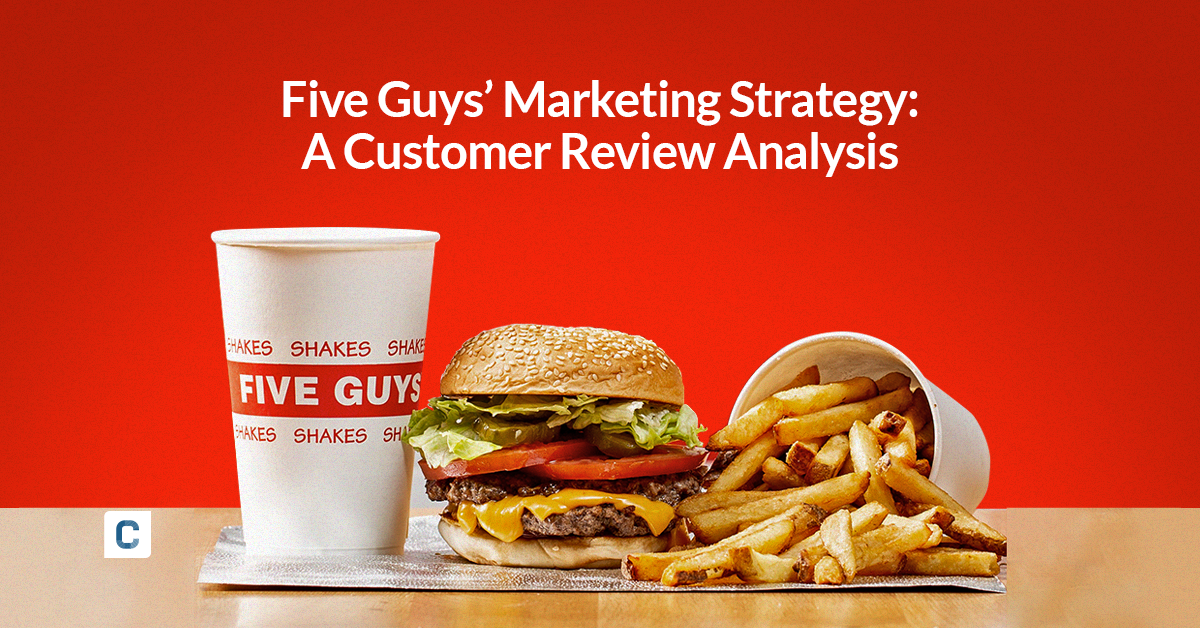
Five Guys’ Marketing Strategy: A Customer Review Analysis
Five Guys caters to burger lovers seeking high-quality food and friendly service – all while keeping things simple. To understand how Five Guys operates its successful marketing strategy, we analyzed 1,236 Google Maps reviews using the text analysis tool, Caplena.
Everything You Need to Know About The Job Market After Covid 🦠
In the last two years, our work practices have undergone some significant changes. At the present time, there appears to be an increase in the number of job switches. This article examines the reasons for this by analyzing various studies – as well as our own in-house survey.
6 Things That Make Christmas Markets so Irresistibly Christmassy
What are the most common things people mention when they talk about their most recent Christmas market visit? To find out, we studied three highly rated – but different – Christmas markets to analyze their Google reviews.
How to Collect Surveys and Conduct Feedback Analysis in 1 Day
The research world is like a toolbox. Within the toolbox are surveys, focus groups, and experiments. Recently, the size of this toolbox has increased with social media, internet-based surveys, and mobile phones being used more frequently...
Analyzing Netflix Open-Ended Feedback: A 3½-Step Video Tutorial
This tutorial is all about Netflix! : We’ll take you through every step required to evaluate your open texts with the help of AI. If you follow the 3 required steps described in the guide below in all detail, it will take you approximately 45 minutes to get to achieve these results.
Customer Review Champion: Adidas vs Nike
Who is the GOAT, Messi or Ronaldo? Are you a Derrick Rose or LeBron James fan? Do you prefer Collin Morikawa or Rory McIlroy? Depending on your answers, it is likely we could predict your favorite footwear brand. How?
Five Guys’ Marketing Strategy: A Customer Review Analysis
Five Guys caters to burger lovers seeking high-quality food and friendly service – all while keeping things simple. To understand how Five Guys operates its successful marketing strategy, we analyzed 1,236 Google Maps reviews using the text analysis tool, Caplena.
Everything You Need to Know About The Job Market After Covid 🦠
In the last two years, our work practices have undergone some significant changes. At the present time, there appears to be an increase in the number of job switches. This article examines the reasons for this by analyzing various studies – as well as our own in-house survey.
6 Things That Make Christmas Markets so Irresistibly Christmassy
What are the most common things people mention when they talk about their most recent Christmas market visit? To find out, we studied three highly rated – but different – Christmas markets to analyze their Google reviews.
How to Collect Surveys and Conduct Feedback Analysis in 1 Day
The research world is like a toolbox. Within the toolbox are surveys, focus groups, and experiments. Recently, the size of this toolbox has increased with social media, internet-based surveys, and mobile phones being used more frequently...